







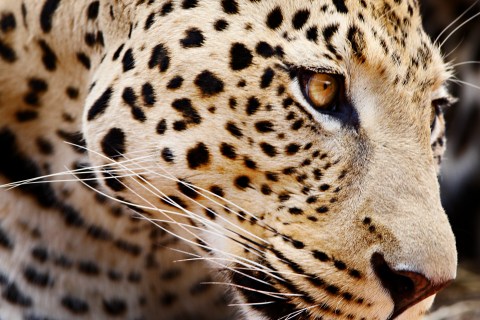
A new study from researchers at Bristol University in the U.K. has shown that author Rudyard Kipling was more right than you’d think.
Will Allen, a behavioral ecologist, studied the coat patterns of 35 wild cat species and compiled details of their habitats, hunting styles and when they went on the prowl. He found that cats with complex and irregular markings, such as the spotted leopard, were commonly found in dense, dark forests and hunted at night. Their fur helps to camouflage them in places where there tends to be dappled light. Similarly cats that hunt on open, rocky ground by daylight tend to have evolved plain-colored coats. (See TIME’s pictures of The African Plain at Night)
In Rudyard Kipling’s famous Just So Stories of 1902, the ‘How The Leopard Got His Spots’ story describes how an Ethiopian hunter paints spots on a leopard to help it blend into the “speckly, patchy-blatchy shadows” of the forest. “Apart from the painting part, Kipling was quite right,” said Allen to the Guardian. “The leopard got its spots from a life in forested habitats, where it made use of the trees and nocturnal hunting.” (Read Bryan Walsh on Wildlife: A Global Convention on Biodiversity Opens in Japan, But Can It Make a Difference?)
Who says literature and science don’t go together? (via Guardian)